

NVIDIA and Microsoft Widen Azure, Foundry and Windows AI Tools
NVIDIA says Azure now offers Vera Rubin NVL72 machines in preview, with open Nemotron models in Foundry and local options for edge and PCs. Prices, regions and Malaysian availability are not stated in NVIDIA's post.
By Utopia Data & AI Team6 min read
In brief
- NVIDIA and Microsoft announced at Microsoft Ignite that Azure virtual machines powered by NVIDIA Vera Rubin NVL72 systems are expanding, and that Nemotron 3.5 open models and customisation tools are reaching more customers through Microsoft Foundry.[1]
- The companies also announced Azure Local support for NVIDIA RTX PRO 6000 Blackwell GPUs and Jetson Thor and Jetson Orin, plus Direct Stream for GPU-accelerated Windows 365 Cloud PCs, with public preview planned for early 2027.[1]
- The post gives no prices or regional availability. EY's reported gains come from NVIDIA's account of a customer project, and we did not test any service.[1]
What NVIDIA and Microsoft announced
NVIDIA and Microsoft used Microsoft Ignite to describe a wider set of AI tools that run from Azure data centres to edge servers and Windows PCs. In a blog post published on 19 November 2026, NVIDIA said the two companies are expanding access to Azure virtual machines powered by NVIDIA Vera Rubin NVL72 systems, as well as open NVIDIA models and customisation tools in Microsoft Foundry.[1]
The post describes Azure's Vera Rubin offering as a preview that builds on joint design and tuning work. NVIDIA says the systems are running in Azure data centres and are built for reasoning, agentic applications and large-scale training and inference. It does not say which Azure regions have them or how customers sign up.[1]
This story relies on NVIDIA's own post. Customer results and benchmark figures are NVIDIA's descriptions, and we did not run any of the services or confirm the claims with Microsoft.[1]

Vera Rubin on Azure, with security and power work
NVIDIA says Vera Rubin NVL72 systems are running in Azure data centres, and it points to recent benchmark results as evidence of the codesign. In MLPerf Training v6.1, Azure scaled to 10,240 NVIDIA GPUs using GB200 NVL72 systems on the DeepSeek-V3 model, which NVIDIA says was the largest scale in that round.[1]
In MLPerf Inference v6.1, NVIDIA says Azure's GB300 NVL72 systems led cloud submissions on DeepSeek-R1 interactive throughput by more than 10%, citing the analyst firm Signal65. These results describe earlier Blackwell-based systems, not the Vera Rubin machines in preview.[1]
The companies are also working to extend confidential computing to bare-metal and rack-scale infrastructure. NVIDIA says its Confidential Computing and attestation features let customers verify the computing environment before they release sensitive models, data or keys. A separate effort on power efficiency uses NVIDIA MaxLPS to help data centres get more performance from the power they have.[1]
Open models and customisation in Microsoft Foundry
Microsoft's serverless Programmed Training offering lets developers control post-training workflows while Foundry manages the infrastructure. Foundry Managed Compute now supports deploying custom model weights. NVIDIA says the aim is to connect model customisation with deployment through managed services, so firms can focus on their own data and on evaluating the responses.[1]
As an example, NVIDIA says EY used Programmed Training to adapt Nemotron open models to classify corporate purchasing records. It reports a 55% accuracy gain on EY's evaluation dataset and a 15 times lower cost than proprietary frontier models. The post does not publish the dataset, the baseline models or the test method.[1]
The expanded Nemotron 3.5 lineup on Foundry Managed Compute includes Super for long-running agents and Lightning for fast responses and tool use. Companion models cover embedding and reranking, document parsing and content safety. Nemotron 3.5 Bolt, for high-throughput reasoning, and a speech recognition model called Transcribe are listed as coming soon.[1]

Azure Local, edge systems and Windows PCs
For organisations that want to keep models near their data, NVIDIA says Foundry Local gains expanded Nemotron 3.5 support for Azure Local environments. Azure Local will support NVIDIA RTX PRO 6000 Blackwell GPUs from hardware partners and is expanding to Jetson Thor and Jetson Orin for machine vision, robotics and autonomous operations. NVIDIA's Cosmos physical AI models are also coming to Foundry Local.[1]
On the PC side, the companies will show local large language model experiences on Windows PCs powered by NVIDIA RTX Spark at Ignite. They are also bringing Direct Stream to GPU-accelerated Windows 365 Cloud PCs, which NVIDIA says supports up to two 4K streams at 60 frames per second. A limited preview is open for sign-ups, and public preview is planned for early 2027.[1]
For science, NVIDIA says its BioNeMo Agent Toolkit and ALCHEMI Toolkit are joining the Microsoft Discovery catalogue. An initial integration uses the RFD4-Proteina model, built with the University of Washington's Institute for Protein Design, to propose candidate protein structures that still need laboratory validation.[1]
How Microsoft uses NVIDIA software itself
NVIDIA says Microsoft AI uses NVIDIA Dynamo for reinforcement learning rollout inference during post-training, the step that generates the experiences used to improve a model. Dynamo coordinates inference across a large GPU fleet and helps manage requests, model updates and recovery from failures.[1]
The post adds that NVIDIA RTX PRO 6000 Blackwell GPUs accelerate Microsoft's Bing search models. NVIDIA also says it will have a GB300 NVL72 rack and RTX Spark devices at its Ignite booth. These claims come from NVIDIA, and the post does not give Microsoft's own figures.[1]
Why Malaysia should care
Our analysis: Malaysian firms that already use Azure may be able to test open Nemotron models and local deployment without moving data to a new vendor. NVIDIA's post names no region, price or Malaysian customer, so check Azure's regional pages before you plan.
Malaysian firms on Azure
Open Nemotron models and custom weights in Foundry may let teams adapt a model on their own data inside a service they already pay for. No price or region is given.[1]
Practical move: Check which Foundry models and Azure regions your tenant can use today.
Malaysian factories and warehouses
Azure Local on Jetson Thor and Jetson Orin points to on-site machine vision and robotics, where data stays near the machine.[1]
Practical move: List one vision task that needs low latency and ask a partner whether Azure Local supports it.
Malaysian IT teams with design or engineering staff
GPU Cloud PCs with Direct Stream may suit graphics-heavy work over weaker networks, but preview access is limited until early 2027.[1]
Practical move: Join the sign-up list only if a pilot group has a clear graphics workload.
What Malaysians can do now
- Read NVIDIA's Ignite post and Microsoft's Foundry documentation side by side.
- Ask your Microsoft partner which Vera Rubin and Nemotron services are open in Malaysian or nearby Azure regions.
- Run any model test on non-sensitive data, and record cost and accuracy before you commit.
What we still do not know
What we still do not know
- Which Azure regions offer Vera Rubin NVL72 machines, and what they cost.
- How EY's 55% gain and 15 times cost saving were measured.
- When Nemotron 3.5 Bolt and Transcribe reach Foundry customers.
Sources
- NVIDIA and Microsoft Expand Accelerated Computing From Azure to Windows PCsNVIDIA Blog, 19 November 2026
- File:View of Microsoft campus from building 36.jpgWikimedia Commons, 13 January 2015
- File:Microsoft Surface Laptop 7.jpgWikimedia Commons, 11 July 2024
- File:NVidia Jetson Orin AGX.pngWikimedia Commons, 28 January 2024
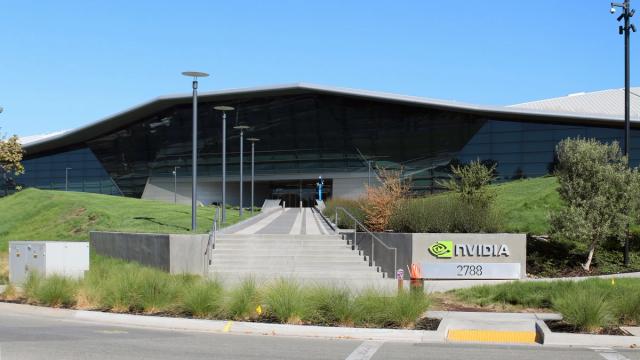
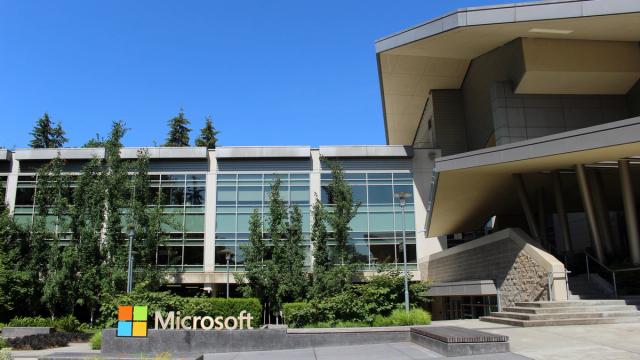
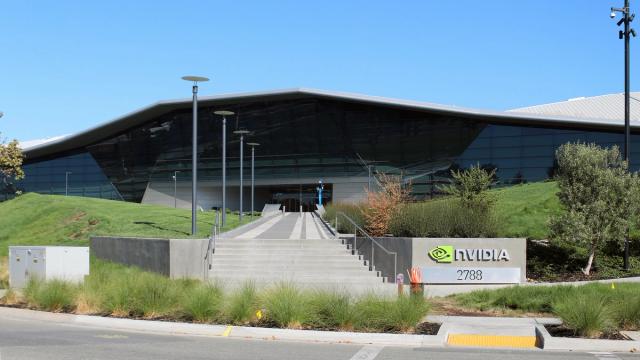
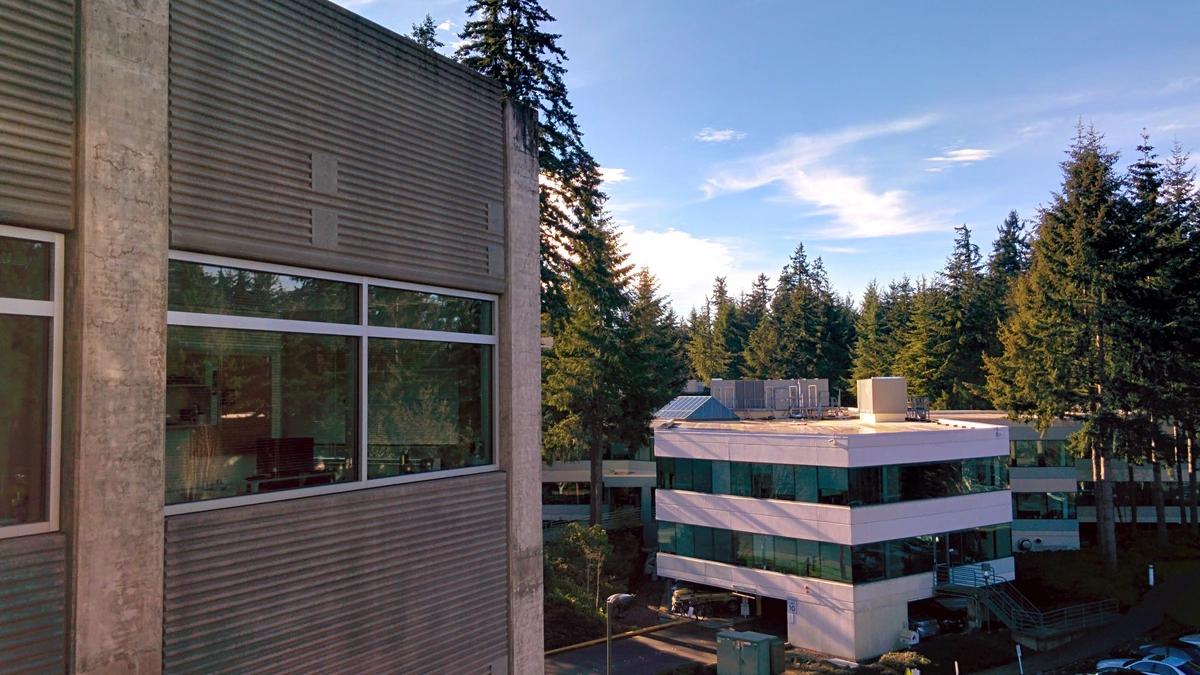
Facts come from an NVIDIA Blog post dated 19 November 2026, read on 20 November. Customer results and benchmark figures are those NVIDIA reported, and we did not confirm them with Microsoft. Sections marked as our analysis are Utopia's interpretation. We did not test any service. The three photographs are licensed contextual images and none shows Ignite or the announced products. No generated image is used.
Last fact check: 20 November 2026. Factual correction? devteam.utopia@gmail.com.