

NVIDIA Brings Science Agents, Rubin HPC and Desk-Size Clusters to SC26
NVIDIA used its SC26 address to pitch AI agents that plan experiments and run simulations on a researcher's own machine. The new Rubin HPC GPU is not due until 2028, and most results come from NVIDIA's own talk.
By Utopia Data & AI Team6 min read

In brief
- At SC26 in Chicago, NVIDIA's Ian Buck announced Nemotron for Science, an open model toolkit for agents that plan experiments, run code and check results on a researcher's own system.[1]
- NVIDIA also announced Rubin HPC, a GPU with more than 50,000 CUDA cores expected in 2028, and a DGX Spark HPC Developer Kit that links four Spark systems into a 512GB desk-side cluster, on sale now.[2][3]
- Most figures, such as an agent fixing 81% of broken GROMACS setups, come from NVIDIA's own presentation and partners. We have not tested any of the tools.[1]
What NVIDIA announced at SC26
NVIDIA used the opening of the SC26 supercomputing conference in Chicago to argue that science is entering an age of agents, meaning software that can plan experiments, run code and check results. On Monday 16 November 2026, Ian Buck, the company's vice president of hyperscale and high-performance computing, announced Nemotron for Science, a new Rubin HPC GPU and an expanded Vera CPU platform.[1]
NVIDIA published the details in a blog post dated 17 November by Brian Caulfield, with companion posts on Rubin HPC and a DGX Spark developer kit dated 16 November. Buck also described a quantum computing collaboration with IBM and Fermi National Accelerator Laboratory.[1][2][3]
This story relies on NVIDIA's own posts. Outcomes such as the agent results below were reported by NVIDIA and its partners, and we did not run any of the tools.[1]

Nemotron for Science and the agent results
Nemotron for Science combines the Nemotron 3.5 Super VL open model with a new open chemistry dataset and post-training recipes for life sciences and chemistry. Buck said researchers can run it locally on a DGX Spark, a workstation or their own supercomputer. "You own your data. You own the model," he said.[1]
Buck gave several examples. At Argonne National Laboratory, an agent built with the toolkit took one prompt, planned and tested hypotheses, chose which simulations to run and identified two new binding sites. At KTH Royal Institute of Technology, an agent that repairs broken GROMACS setups fixed 81% of test cases in one overnight run on a single DGX Spark.[1]
At the SETI Institute, an agent at the Allen Telescope Array took a one-line prompt and plotted a methanol line. NVIDIA's new Nsight AI Porting Agent moved a routine from the Weather Research and Forecasting model to GPUs and sped it up more than five times, using about 150 million tokens, Buck said.[1]
Rubin HPC and the CPU side of the agent loop
Rubin HPC is a GPU in the Vera Rubin platform built for simulation, engineering and analytics. NVIDIA's post says it has more than 50,000 CUDA cores on one GPU, adds sparse-data acceleration and links over seventh-generation NVLink. Buck said that is about three times the cores of Hopper. It is expected to be available in 2028.[1][2]
NVIDIA's argument is that agents lean on CPUs to run tool calls between model steps, so the agent loop needs both. Buck said the German Climate Computing Center, DKRZ, has selected Vera CPUs for its HLRE-5 supercomputer, expected in early 2028, and that it joins Vera systems already announced at the Texas Advanced Computing Center.[1]

A four-node cluster for the desk
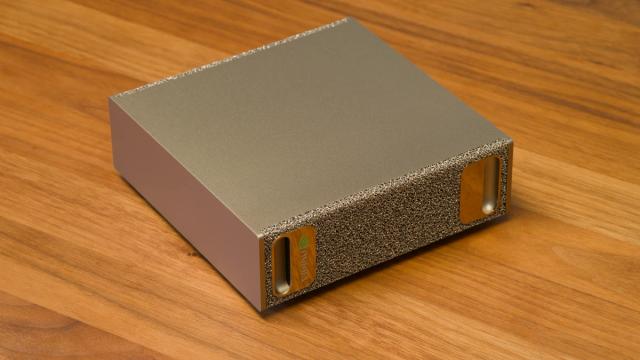
The DGX Spark HPC Developer Kit is a four-node cluster of DGX Spark systems, each linked directly to its two neighbours in a ring with ConnectX-7 networking and no network switch. NVIDIA says four nodes give 512GB of combined memory and 16TB of NVMe storage, enough to run models of up to 700 billion parameters locally with NVFP4.[3]
NVIDIA says the kit is on display at SC26 and available for sale through OEM partners including Acer, ASUS, Dell Technologies, GIGABYTE, H3C, HP, Lenovo, MSI and xFusion, and through NVIDIA Marketplace. The post gives no price. An installation playbook for the NVIDIA HPC SDK is described as coming soon.[3]
The post cites early users. A Berkeley lab reported results 15 times sooner on a DGX Spark than with an 11-hour cluster queue, and another Berkeley group fitted a 120B-class model on one device for LoRA fine-tuning. These are NVIDIA's descriptions of partner work.[3]
Quantum co-design and networking
Buck said NVIDIA, IBM and Fermilab plan a quantum co-design platform for error-correction research, pairing NVIDIA DGX B200 systems with IBM quantum computers, including those powered by IBM Quantum Nighthawk. A new CUDA-Q decoding algorithm, TCBP-JOBS, cuts error-correction research computation from 12 weeks to 45 minutes, he said.[1]
He also showed one of the first deployments of NVIDIA Photonics co-packaged optics switches, at Lambda, which he said are 15 times more reliable on bit errors and link flaps. Buck said a simulation on the JUPITER supercomputer at Jülich showed that magic state cultivation can cut the operations for one logical step tenfold, and that the work is being added to CUDA-Q.[1]
Why Malaysia should care
Our analysis: Malaysian universities and research institutes with a DGX Spark could try local science agents without waiting for shared cluster time. NVIDIA names no Malaysian customer, price or local availability, so check with a reseller before you plan a purchase.
Malaysian universities and research institutes
A desk-side cluster could cut waiting time for shared GPU hours. NVIDIA gives no price or Malaysian availability.[3]
Practical move: Ask a local reseller for a quote and delivery time before you plan a budget.
Malaysian AI and data teams
Nemotron for Science is an open toolkit for chemistry and life sciences, so teams in those fields can test agents on their own data.[1]
Practical move: Read NVIDIA's documentation and test on a small, non-sensitive dataset first.
Malaysian chip and data-centre planners
Rubin HPC is not expected until 2028, so it does not change purchases made today.[2]
Practical move: Treat Rubin HPC as a roadmap item, not a current option.
What Malaysians can do now
- Read NVIDIA's SC26 posts on Nemotron for Science and the DGX Spark HPC Developer Kit.
- List which research workloads wait longest for shared GPU time at your organisation.
- Ask a reseller for the kit's price and local availability before you plan a purchase.
What we still do not know
What we still do not know
- What the DGX Spark HPC Developer Kit costs, and when it is sold in Malaysia.
- Whether the agent results hold outside the labs and workloads NVIDIA chose to show.
- When the HPC SDK playbook ships, and how Rubin HPC performs against its 2028 promise.
Sources
- Ian Buck Kicks Off NVIDIA's Week at SC26 as Science Enters the Age of AgentsNVIDIA Blog, 17 November 2026
- NVIDIA Announces Rubin HPC — A New GPU to Accelerate Agents for Science, Engineering and AnalyticsNVIDIA Blog, 16 November 2026
- NVIDIA DGX Spark Developer Kit Turns a Desk Into a Supercomputing LabNVIDIA Blog, 16 November 2026
- File:JUPITER racks with logos of supporters and partners. Copyright- Forschungszentrum Jülich - Sascha Kreklau.jpgWikimedia Commons, 30 June 2025
- File:Allen Telescope Array - Flickr - brewbooks.jpgWikimedia Commons, 23 October 2010
- File:Nvidia DGX Spark oblique view dllu.jpgWikimedia Commons, 16 May 2026
Facts come from NVIDIA Blog posts dated 16 and 17 November 2026, read on 19 November. Results and figures are those NVIDIA and its partners reported. Sections marked as our analysis are Utopia's interpretation. We did not test any tool. The three photographs are licensed contextual images and none shows an SC26 announcement. No generated image is used.
Last fact check: 19 November 2026. Factual correction? devteam.utopia@gmail.com.