

MIT Researchers Use an AI Agent to Remap Knobs and Faders for Software
MIT researchers say an AI agent can reprogram everyday mixers and control pads to run photo editing, music, 3D modelling and animation software. The system has been demonstrated but not yet tested in a user study.
By Utopia Data & AI Team6 min read

In brief
- MIT News reported on 24 November 2026 that a graduate student and researcher at MIT CSAIL co-developed TangiMap, a system that uses an AI agent to map digital software functions onto physical controls such as knobs, faders and buttons.[1]
- The agent gathers context from the program's API, an MCP server or a screenshot read by a vision-language model, then uses a large language model to build the mapping. Demonstrations covered photo editing, music mixing, Blender 3D modelling and cartoon puppeteering.[1]
- The work was presented at the ACM Symposium on User Interface Software and Technology. The team has not yet run a user study, and we have not tried the system or read the paper.[1]
What the MIT team reported
MIT News reported on 24 November 2026 that a new system called TangiMap, co-developed by an MIT graduate student and a researcher at the Computer Science and Artificial Intelligence Laboratory (CSAIL), uses an AI agent to personalise the physical controls on everyday devices. It maps digital widgets onto knobs, sliders and buttons, so a device such as a mixer can be used for photo editing, animation, music performance or 3D modelling.[1]
The article is by Alex Shipps of MIT CSAIL. The lead researcher quoted is Yunyi Zhu, a doctoral student in MIT's Department of Electrical Engineering and Computer Science, whose advisor is Associate Professor Stefanie Mueller. Her co-author is Chang Xiao, an assistant professor at Boston University.[1]
This story rests on MIT's own article. The claims and demonstrations are the researchers' own. We have not tried TangiMap, read the paper or watched the demonstration video.[1]
Why physical controls matter
MIT News opens with a familiar example. In 2017 Apple removed the home button from its iPhones, and users lost a convenient, tangible control. The article says this was part of a wider shift to digital buttons, knobs and sliders, which now appear in cars for radio presets and air conditioning, and in kitchens on smart fridges.[1]
The researchers argue that physical controls should not be left behind entirely. The article says they tend to be more convenient and efficient, and at times more precise, for example when a dial is used to set the volume just right. A gaming controller can be used without looking at it. The catch is that tangible controls are usually preprogrammed for one job, which limits their use.[1]
Yunyi Zhu, a doctoral student in MIT's Department of Electrical Engineering and Computer Science and a CSAIL researcher, says the aim is to use controls eyes-free, the way a driver adjusts a car's volume without looking away from the road. She adds that physical controls let a person change several settings at once, such as brightness and contrast when editing an image, which she calls hard to do on a screen.[1]
How the TangiMap agent maps a control
TangiMap relies on an AI agent, which the article describes as a semi-autonomous program that completes well-defined tasks. The agent gathers context about the software in use, the user's tendencies and the control device. To do that it can draw on the program's API, an MCP server, or a screenshot interpreted by a vision-language model.[1]
The article explains an API as the rules that let programs talk to each other, and an MCP server as a standard that connects AI agents to apps. Once the context is collected, the agent uses a large language model to put it into a file. It then maps specific digital functions to specific physical controls on the device.[1]
The MIT comparison is a DJ's pads, which switch between triggering cues, loops and samples. In the same way, TangiMap gives the knobs, faders and buttons of an everyday device entirely new roles depending on the task. The system was co-developed by an MIT graduate student and a researcher at CSAIL, according to the article.[1]
What the researchers built with it
The article lists four demonstrations. The team turned a standard mixer into a photo-editing controller, so they could adjust colour in Adobe Lightroom while a matching visualisation of the controls appeared on screen. They did the same with sound-mixing software, so performers can change music in real time with knobs and faders.[1]
A simpler mixer was reprogrammed to work with the 3D modelling program Blender. The interface includes a place to type a prompt. Once the model is generated, users can adjust features such as shininess with the physical controls. In Adobe's Character Animator, TangiMap linked expressions and movements to buttons on a control pad, so users could puppeteer a cartoon character live.[1]
Zhu and co-author Chang Xiao, an assistant professor at Boston University, presented the tool at the ACM Symposium on User Interface Software and Technology earlier this month, the article says. The work was supported in part by Google's Gemini Academic Program Award. The paper is titled “TangiMap: Context-Aware Generative Function Mapping for Tangible Input Devices.”[1]
Limits and what comes next
Zhu and Xiao built a custom user interface for each application. The article says this adds another layer of personalisation, but the team hopes to make a more streamlined system in which a designer generates the interface for a device by taking a picture. That suggests the current setup needs hand-built screens for each program.[1]
The researchers are also looking at ergonomics. They want to use more ergonomic devices and account for where users put their hands, since a mixer is held differently for music than for a video game. Zhu hopes to run a user study to learn whether this kind of smart DJing improves the experience. The article reports no such study yet.[1]
Zhu's longer-term idea is to build physical objects that use an AI agent as a brain to decide what to become in a given situation. A chemical jar could say whether it is sealed correctly, or show what it is typically used for. The article says that kind of versatility is a way off, and that it would need more powerful agents and more intricate fabrication pipelines.[1]
Why Malaysia should care
Our analysis: MIT names no Malaysian partner and describes a research prototype, not a product. Malaysian creative studios, content creators and music producers already use mixers and control pads with editing and audio software, so the idea touches familiar tools. The article gives no price, release date or code, and it names only Adobe Lightroom, Adobe Character Animator and Blender as tested programs. Local users cannot try TangiMap today, and any interest should wait for a public release or a user study.
Malaysian creative studios and content creators
The demonstrations use mixers and control pads with editing and audio software, which many studios already own. The article reports no tests beyond four programs.[1]
Practical move: Watch the project website and paper before planning any trial.
Malaysian universities and design schools
The work joins AI agents with human-computer interaction and fabrication, and it names an MCP server as one way the agent reads software.[1]
Practical move: Use the paper as a teaching case on agents that adapt hardware to software.
Malaysian software and hardware makers
The team says it hopes to generate a device's screen from a photo, which suggests today's setup needs hand-built interfaces.[1]
Practical move: Wait for a public release before judging fit with any product.
What Malaysians can do now
- Read the paper and project page before repeating any claim about what TangiMap can do.
- Check which programs the team actually tested before assuming it works with your own tools.
- Wait for a user study or release before planning a pilot.
What we still do not know
What we still do not know
- Whether people work faster or more accurately with the remapped controls, because no user study is reported.
- Whether the team will release code or a product, and on what terms.
- How well the agent copes with programs beyond the four demonstrated.
Sources
- Agentic system personalizes physical controls to help users “DJ their art”MIT News, 24 November 2026
- File:KORG KAOSS DJ Controller - 2015 NAMM Show.jpgWikimedia Commons, 22 January 2015
- File:Livid Code v2 MIDI controller knobs details (by Audiotecna).jpgWikimedia Commons, 29 August 2014
- File:NI Traktor Kontrol S2 - DJ gear.jpgWikimedia Commons, 17 January 2010
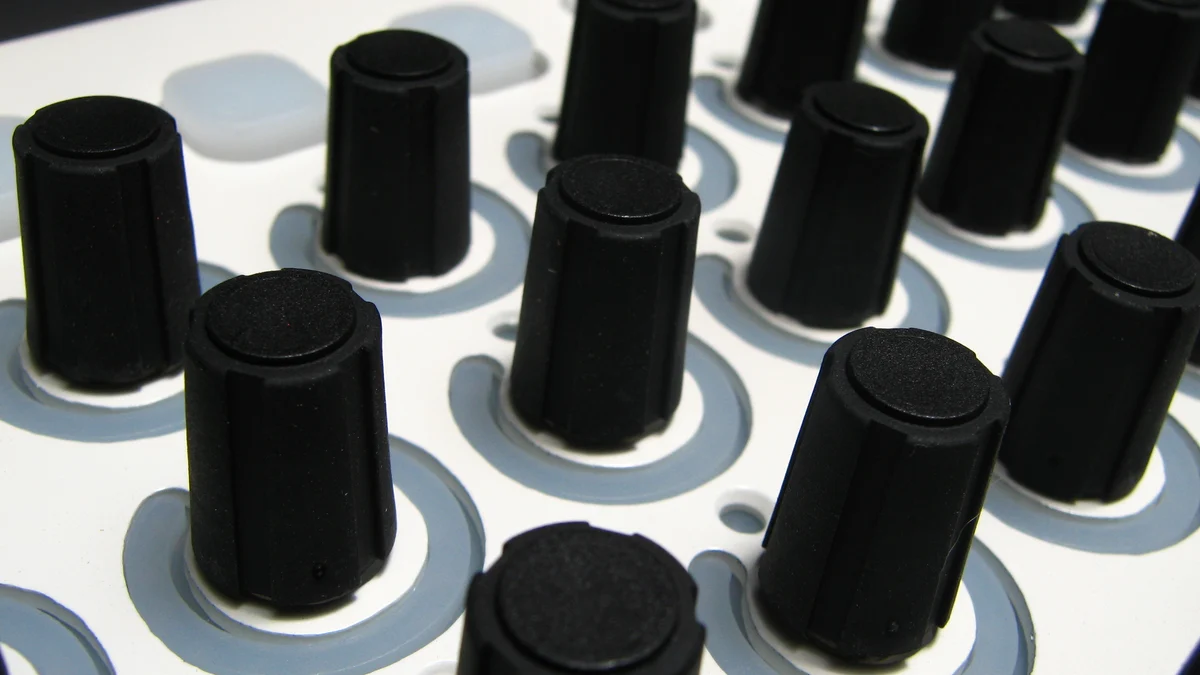
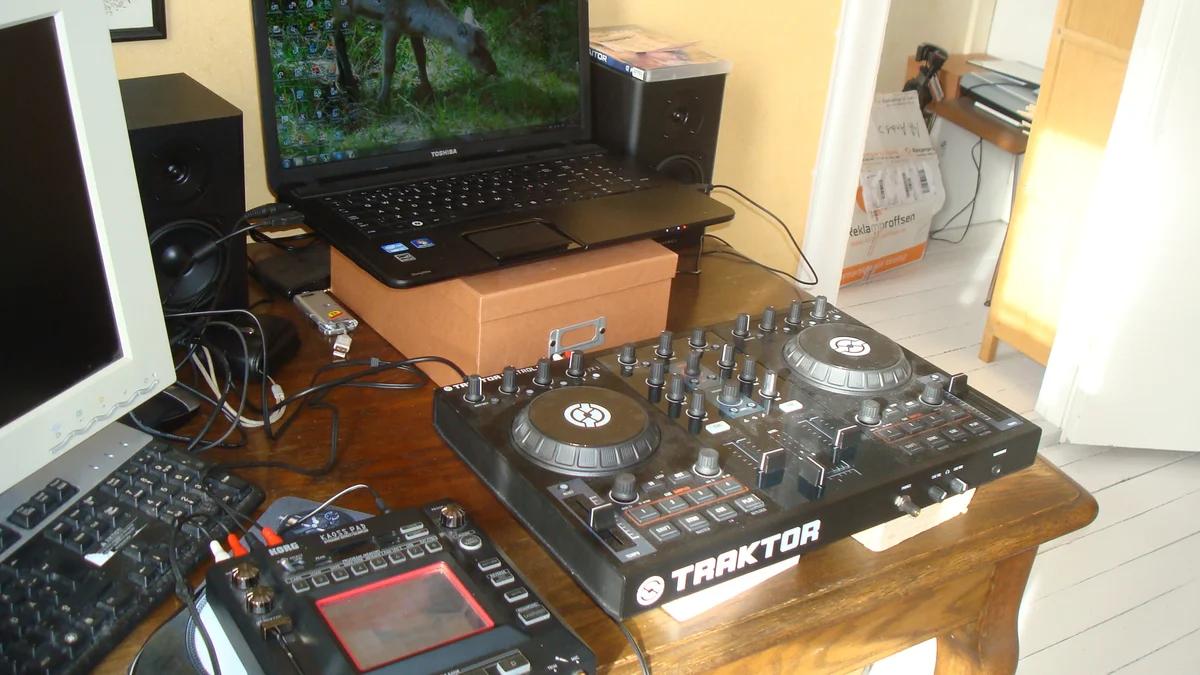
Facts come from MIT News dated 24 November 2026, read on 25 November. Demonstrations and claims are those the researchers reported, and we did not try the system, read the full paper or watch the video. The section marked as our analysis is Utopia's interpretation. The three photographs are contextual images of commercial DJ and MIDI controllers from Wikimedia Commons. None shows TangiMap or the MIT prototype, and no generated image is used.
Last fact check: 25 November 2026. Factual correction? devteam.utopia@gmail.com.