

MIT Researchers Keep AI Models of Chaotic Systems Within Physical Limits
MIT researchers say a projection layer that enforces energy dissipation can guarantee that a learned model of a chaotic system never runs away to impossible values, however long the forecast. The paper is in PNAS and the code is open.
By Utopia Data & AI Team6 min read
In brief
- MIT News reported on 20 November 2026 that researchers at MIT's Laboratory for Information and Decision Systems found a way to force machine learning models of chaotic systems to stay within physically possible bounds.[1]
- The method teaches the model an energy-like function and adds a projection layer that enforces energy dissipation as a hard constraint. The team says this guarantees bounded predictions over arbitrarily long forecast windows.[1]
- The paper appears in the Proceedings of the National Academy of Sciences, and the team has released open-source code. All results are the researchers' own, and we have not read the paper or run the code.[1]
What the MIT team reported
MIT News reported on 20 November 2026 that researchers at the Laboratory for Information and Decision Systems (LIDS) at the Massachusetts Institute of Technology developed a way to place physics-based limits on machine learning models of chaotic systems. Such models are used for weather, climate, turbulent flows in aviation and ocean currents. The article says they are still prone to drift into physically impossible predictions over time. The new approach is meant to ensure that a model never exceeds realistic bounds.[1]
The findings appear in the Proceedings of the National Academy of Sciences (PNAS), in a paper by graduate student Sunbochen Tang and professors Navid Azizan and Themistoklis Sapsis. The paper is titled "Learning dissipative chaotic dynamics with boundedness guarantees." The team says it is making the supporting information and open-source code freely available.[1]
This story rests on MIT's own article. The claims and results are the researchers' own. We have not read the paper, run the code or seen the test outputs.[1]
Why long forecasts drift
The article describes chaotic systems as ones where tiny differences in the starting conditions lead to very different outcomes. Azizan says that makes behaviour far into the future extremely difficult to predict. Even so, he points out that real systems stay inside physical limits. In his words, chaos does not mean anything can happen, and a model of such a system should stay bounded too.[1]
The trouble, according to Azizan, is that a model can match the data over a short period and still fail when it runs for a long time. Small errors accumulate until the simulation produces values that grow without limit. Sapsis, a professor of mechanical engineering and LIDS affiliate, says the lack of guarantees for a bounded response has long been a major obstacle to data-driven models of complex nonlinear systems.[1]
The article lists fluid dynamics and weather forecasting as areas where this matters. Turbulent flows can disrupt air travel, reduce the efficiency of wind turbines and affect the fuel economy of vehicles. In weather, the chaotic nature of the atmosphere already makes long-term predictions difficult, so a model that adds its own runaway errors compounds the problem.[1]
How the constraint works
Tang says earlier attempts mostly imposed penalties or incentives during training, often through functions designed from privileged information about the system. Those apply only while the model is being trained. He says there is no guarantee that the model satisfies the intended constraints at test time, when it meets new inputs, so it could still produce unbounded predictions.[1]
Capping outputs at a fixed value, such as 100 degrees for a temperature, would keep predictions bounded. Tang says that could stop the model from representing complex features it should learn from the data. The team took a different route and built an energy-based constraint. The model learns an energy-like function, together with a boundary inside which its chaotic behaviour should stay.[1]
The team then adds a projection layer, a component that adjusts how the model predicts the system will evolve, to enforce energy dissipation as a hard constraint. Outside the boundary, the energy-like quantity must decrease, so the simulated system is drawn back toward the bounded region. Tang says this lets the team establish theoretical guarantees that predictions remain bounded over arbitrarily long forecast windows.[1]
Azizan calls the key difference hard constraining versus soft constraining. Many current approaches try to encourage a model to satisfy a constraint without treating it as a hard rule. This approach is based on hard-constrained neural networks, so the output is always physically consistent, he says, even for a case the model has not seen. The article calls this the first work to establish such formal guarantees for machine learning models of chaos.[1]
Tests, data and reach
The team tested the approach on a range of well-known physical systems, from simple textbook cases to highly complex multidimensional ones. According to the article, the models closely matched the true outcomes, while conventional approaches soon deviated into impossible predictions. The article gives no error figures, no list of the systems and no comparison scores, so readers cannot judge how close the match was.[1]
Azizan notes that AI models shine where data is plentiful, as with images and text on the internet. For many physical systems, he says, data is scarce, and physics-constrained approaches can help a lot because the physics of the problem is another source of information. Tang says the projection layer is modular and model-agnostic, so it works with different neural network architectures.[1]
The team plans to continue testing on ever-larger systems. Tang says they want to see how well it works on data-driven models of realistic weather systems, which suggests that has not yet been done. The article also says a follow-up paper by team members this year won the Best Paper Award at the Learning for Dynamics and Control conference.[1]
Limits and what comes next
Boundedness is one guarantee among several a forecaster might want. A model can stay inside realistic limits and still be wrong about where in those limits the system will be. The article does not claim better accuracy than existing models on real weather data, and Azizan frames the result narrowly as one property that must always hold.[1]
The researchers hope others will build on the work and test it on larger and more complex problems. The article reports no commercial release, no partner agency and no adoption by an operational weather or climate centre. Those steps would show whether the approach scales beyond the benchmark systems.[1]
Why Malaysia should care
Our analysis: MIT names no Malaysian partner, and the work is a research method tested on benchmark systems, not a forecasting product. Malaysia deals with monsoon rainfall, flash floods and tropical storms at its edges, and weather and flood models are built on exactly the kind of nonlinear dynamics the paper studies. A learned model that cannot drift into impossible values would matter to any group that runs such models, in principle. The article reports no test on tropical weather data and no tie to any forecasting agency, so local teams would need to validate the method on their own data before relying on it.
Malaysian weather and flood modellers
A learned model that cannot run away to impossible values could make long simulations safer to use. The article reports no test on tropical data.[1]
Practical move: Read the PNAS paper and try the open code on a small local dataset before any wider use.
Malaysian universities
The method joins machine learning, fluid dynamics and control, and it ships with open code that students can run.[1]
Practical move: Use the paper as a teaching case on hard versus soft physical constraints.
Malaysian engineering and energy firms
The article names turbulent flow and wind turbine efficiency as areas where reliable models matter. It shows no industrial result.[1]
Practical move: Watch for tests on larger systems before planning a pilot.
What Malaysians can do now
- Read the PNAS paper before repeating any claim about guaranteed boundedness.
- Check whether the tested systems resemble your own before trying the open code.
- Wait for results on realistic weather data before planning any forecasting pilot.
What we still do not know
What we still do not know
- The error figures and the list of systems the team tested.
- Whether the guarantee holds up and stays useful on large, realistic weather models.
- Whether any forecasting agency or company plans to use the method.
Sources
- New approach enables physically consistent AI models of chaotic systemsMIT News, 20 November 2026
- File:Hurricane Isabel from ISS.jpgWikimedia Commons, 15 September 2003
- File:Vortex street near Madeira Island, Dec 1, 2002.jpgWikimedia Commons, 1 December 2002
- File:Karman vortex street off Alejandro Selkirk Island.jpgWikimedia Commons, 25 March 2016
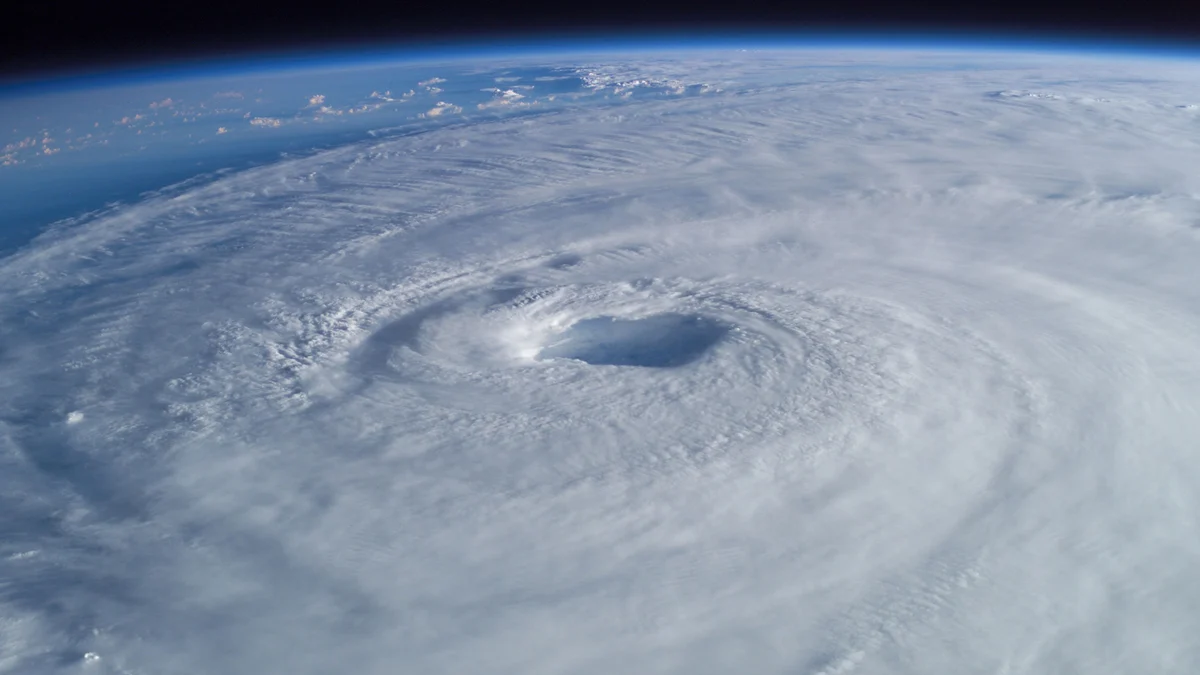
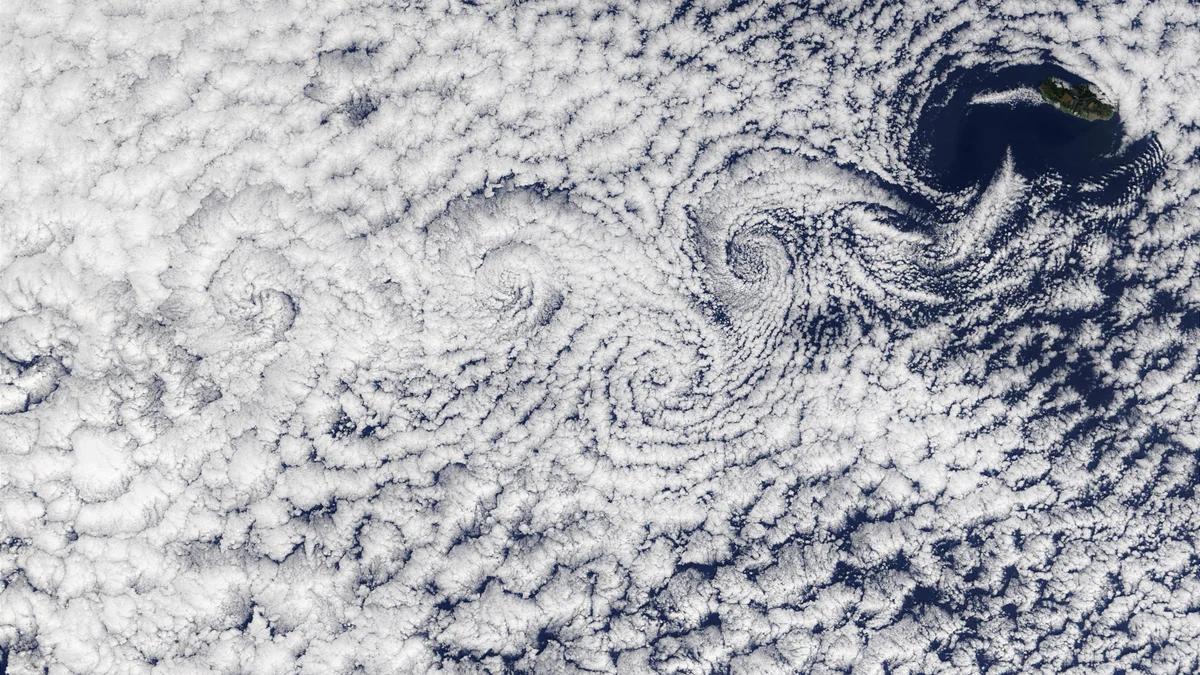
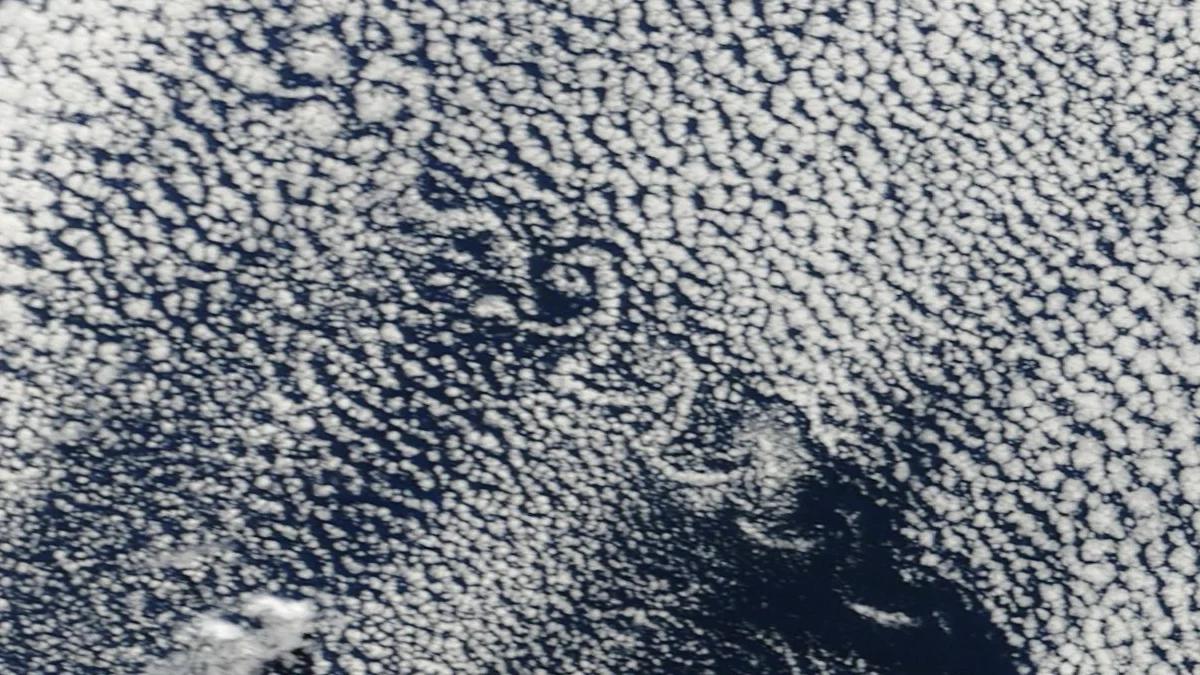
Facts come from MIT News dated 20 November 2026, read on 24 November. Results and claims are those the researchers reported, and we did not run the code or read the full paper. The section marked as our analysis is Utopia's interpretation. The three photographs are contextual NASA images of Hurricane Isabel and of cloud vortices over the ocean. None shows the MIT model or its output, and no generated image is used.
Last fact check: 24 November 2026. Factual correction? devteam.utopia@gmail.com.