


MIT Trains a Small Language Model to Design Analog Chips
MIT researchers say a small language model, trained with a method called SLIC, can design analog circuits close to the level of a frontier model. It runs on a laptop, so confidential foundry data can stay in-house.
By Utopia Data & AI Team6 min read
In brief
- MIT News reported on 23 November 2026 that MIT researchers built SLIC, a training method that teaches a small language model of a few billion parameters to design analog integrated circuits.[1]
- The team says the small model comes close to matching GPT-6-Astra, a frontier model with trillions of parameters, while using a fraction of the compute, and that it can be trained and run on a laptop.[1]
- The model refines designs through simulation feedback and explains its reasoning in plain language. All results are the researchers' own, and we have not read the full paper or tested the model.[1]
What the MIT researchers announced
MIT News reported on 23 November 2026 that researchers at the Massachusetts Institute of Technology developed a way to train a small language model to design analog integrated circuits. The method is called SLIC, short for Small LM Iterating on Circuits. The team says the resulting model matches or beats frontier language models on the task in some tests, though the article describes the result as coming close to GPT-6-Astra rather than clearly surpassing it.[1]
The paper, titled "SLIC: Reinforcement Fine-Tuning Small LMs for Multi-Turn Analog Circuit Optimization," will be presented at the 2026 Conference on Neural Information Processing Systems. Yan Xu, a graduate student in MIT's Department of Electrical Engineering and Computer Science (EECS), is lead author. Ruonan Han, an EECS professor and member of the Research Laboratory of Electronics, is senior author.[1]
This story rests on MIT's own article. The results are the researchers' claims. We have not read the full paper, run the model or seen the circuits it produced.[1]

Why analog design is hard to automate
Analog circuits handle continuous signals, such as radio waves, sensor readings and power levels. They are different from digital logic, which works with ones and zeros. The article says engineers have long struggled to automate analog design, and the work still leans heavily on human skill and repeated trial and error.[1]
Frontier language models are one possible helper. The article notes that they have trillions of parameters and normally run in the cloud. For chip companies, that raises a practical worry. A design team would have to send confidential circuit details and foundry data to an outside provider to use them.[1]
Xu says the team wanted an alternative option for automating analog circuit design. His framing is that a smaller model, trained locally, could keep sensitive data inside the company. That is the researchers' stated motivation, and the article does not report any chip firm that has tried the approach.[1]
How SLIC trains the model
SLIC uses multi-turn reinforcement learning with verifiable rewards. In plain terms, the model makes an initial guess at a circuit design, runs simulations, reads the results and then revises the design. It repeats this loop over several turns, and the simulator supplies a score that can be checked rather than a human opinion.[1]
The article says the model keeps improving a design even after it meets the targets the user set. That matters because a design that merely passes can still use more power or area than needed. The model also describes its reasoning in natural language, so an engineer can follow why it changed a particular part.[1]
The base model has only a few billion parameters. According to MIT, it can be trained and run on a laptop. The article does not name the laptop hardware, the training time or the exact base model, and it does not say how many circuits were used in training.[1]

What the team reports
In the researchers' tests, the small model came close to matching GPT-6-Astra while using a fraction of the compute. The article does not give the scores, the compute figures or the list of circuits. Without those numbers, readers cannot judge how close close is, and the comparison is the team's own.[1]
The team also reports that the model held up on three kinds of unseen conditions. These were circuit structures it had not met in training, more advanced technology nodes, and real commercial processes. Generalisation of this kind is usually the weak point of a learned design tool, so the claim is worth checking in the paper.[1]
The work was funded by Analog Devices, IBM and the John L. Ocampo Endowment Fund of MACOM Technology Solutions. Co-authors named by MIT include Zhengqi Gao, Wenjie Lu of Analog Devices, Xin Zhang of IBM Research and Duane S. Boning, an MIT professor and vice provost. Two of the funders employ co-authors, which readers may wish to note.[1]
Limits and what comes next
The article presents SLIC as an alternative, not a replacement for human designers. It describes no commercial release, no tool that a company can download and no price. It also does not report a head-to-head test against established electronic design automation software, which chip companies already use.[1]
A near match to a frontier model is not the same as a match to an experienced designer. The article does not say how the circuits compare with human-made ones in cost, yield or manufacturability. Those are the questions a chip team would ask first, and they remain open in the material we read.[1]
Verifiable rewards depend on the simulator being right. If a simulation misses a real-world effect, a model can learn to please the simulator instead of the physical chip. The article does not discuss this risk, so we flag it as a general limit of the approach, not as a finding by MIT.[1]
Why Malaysia should care
Our analysis: MIT names no Malaysian partner, and the work is a research method, not a product. Malaysia has a large chip assembly, test and design base in Penang, Selangor and Kulim, and local design houses often handle confidential foundry data. A model that trains and runs on one machine is relevant to them in principle. The article gives no software release, licence or cost, and it reports results on the team's own tests, so local firms would need to validate it on their own processes before relying on it.
Malaysian chip design houses
A model that runs on one machine could keep confidential foundry data in-house. The article reports no release and no test on Malaysian processes.[1]
Practical move: Read the paper and judge whether the tested nodes match your own.
Malaysian universities
The method joins language models, simulation and circuit design, and a laptop-scale setup lowers the hardware barrier for teaching and research.[1]
Practical move: Use the NeurIPS paper as a case study for analog design and machine learning courses.
Malaysian electronics firms
Analog parts sit in power, sensing and radio products. Faster design could matter, but the article shows no manufactured result.[1]
Practical move: Watch for an open release or a test on real silicon before planning a pilot.
What Malaysians can do now
- Read the SLIC paper before quoting the comparison with GPT-6-Astra.
- Ask which technology nodes and commercial processes were tested, and whether they match yours.
- Wait for an open release or silicon results before planning any pilot.
What we still do not know
What we still do not know
- The benchmark scores, the compute used and how many circuits were tested.
- Whether the designs were built in silicon or checked only in simulation.
- Whether the model or code will be released, and under what terms.
Sources
- AI-driven technique could help engineers design analog chips faster and with less expenseMIT News, 23 November 2026
- File:Baikal Electronics@16nmTSMC@ARMv8 A57@Baikal BE-S1000 DSCx06 topmetal@Macro.jpgWikimedia Commons, 13 January 2024
- File:Silicon wafer close view.jpgWikimedia Commons, 21 October 2017
- File:Printed circuit board.jpgWikimedia Commons, 5 November 2011
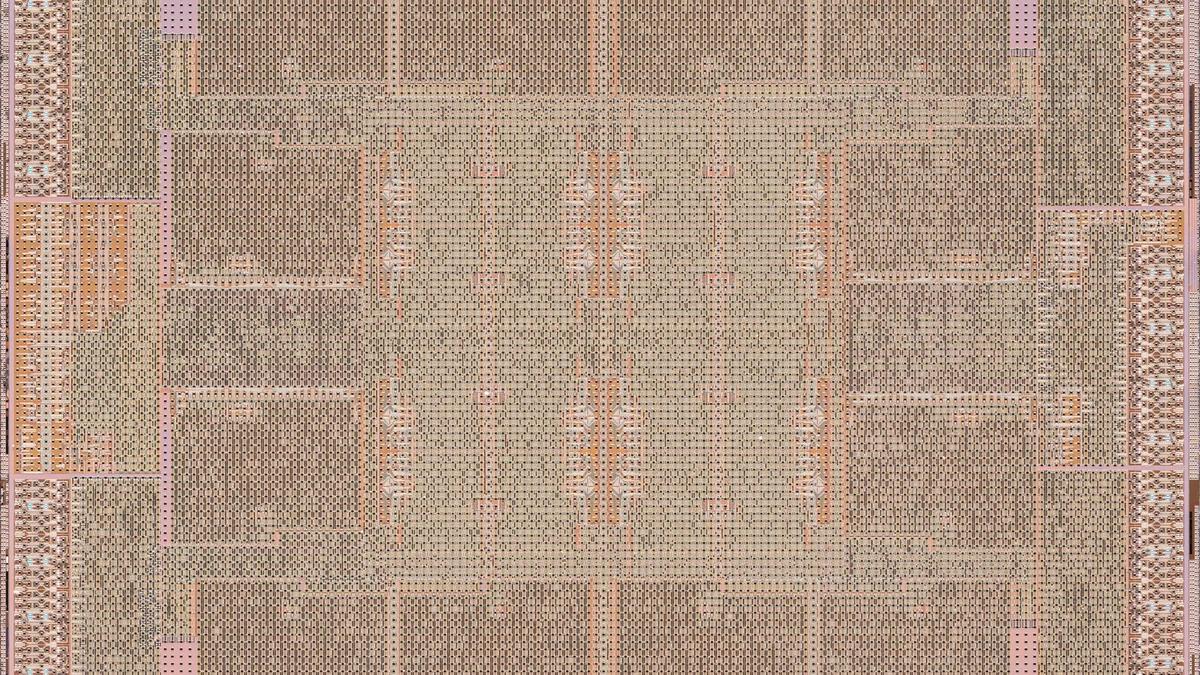
Facts come from MIT News dated 23 November 2026, read on 23 November. Results and claims are those the researchers reported, and we did not run the model or read the full paper. The section marked as our analysis is Utopia's interpretation. The three photographs are contextual: a processor chip die, a silicon wafer and the circuit board of a multimeter. None shows the MIT model or its designs, and no generated image is used.
Last fact check: 23 November 2026. Factual correction? devteam.utopia@gmail.com.