

Thinking Machines Releases Inkling 2 Mini, a Looped 26B Model for Local Use
Thinking Machines Lab released Inkling 2 Mini, a 26-billion-parameter model that activates 3 billion per token and reuses a 12-layer core three times. Benchmark claims are the authors' own, and the post states no licence.
By Utopia Data & AI Team6 min read
In brief
- Thinking Machines Lab released Inkling 2 Mini on 20 November 2026. It is a mixture-of-experts model with about 26 billion total parameters and about 3 billion active per token, and it accepts text and image input with a one-million-token context.[1]
- A 12-layer core runs three times inside 24 physical layers, giving 48 layer visits per token. Learned messages pass information between the passes, and a research variant lets users run one or two passes for speed.[1]
- The authors say it leads four named rivals on 32 of 48 benchmarks. Scores sit in a chart and model card, and the post states no licence, memory need or price.[1]
What Thinking Machines released on 20 November
Thinking Machines Lab released Inkling 2 Mini on 20 November 2026, and Hugging Face published a launch post the same day. The model is a mixture-of-experts system with about 26 billion total parameters, of which about 3 billion are active for each token. It accepts text and image input and supports a context window of one million tokens.[1]
Its unusual feature is a loop. The model has 24 physical decoder layers, but a 12-layer core in the middle runs three times, so each token passes through 48 layer visits. The post says this means the checkpoint stores fewer distinct layers, while each visit keeps its own attention memory.[1]
This story rests on the Hugging Face post and on claims by its authors. We have not run the model or checked its benchmark charts. The post does not state a licence.[1]
How the looped design works
Layers 0 to 5 run once. Layers 6 to 17 form the core and run three times. Layers 18 to 23 run once again. That gives 6 plus 3 times 12 plus 6, or 48 visits per token. The core visits share weights, yet each visit keeps its own key-value and short-convolution state.[1]
The hidden size is 2,304, half the 4,608 of the larger Inkling 2 Small. Each layer routes a token to 8 of 128 experts, compared with 8 of 384 in Small. Every six-layer block holds five sliding-window layers, with windows of up to 1,024 tokens, and one full-attention layer.[1]
Between passes, the model sends learned messages. Each looped layer reads the previous pass's outputs using its own learned query. A small gating controller then decides how much of the layer's input to forget and how much of the message to add. The authors cite earlier looping work from Nanbeige and describe this message scheme as their own approach.[1]
A research checkpoint, TML-d24-varloop-research, was trained to accept a variable number of passes. Running one or two passes instead of three speeds up inference, but the authors say output may be of slightly lower quality. They add that they have not evaluated it in depth.[1]
What the benchmark claims say
The post calls Inkling 2 Mini state of the art in its class on the Artificial Analysis Intelligence Index v5. It says the model leads Gemma 4 31B, Muse Glimmer, Qwen3.8-27B and Nemotron 3.5 Super VL on 32 of 48 benchmarks. The tests cover coding, agentic search and tool use, vision, reasoning and safety.[1]
The named results are mixed. Inkling leads FrontierCode v2.0 and ties Qwen3.8-27B on Terminal-Bench 4.0. It trails Qwen on AutomationBench-AA v1.0.6. The article text gives no scores. Those sit in a chart and in the model card, which we did not check.[1]
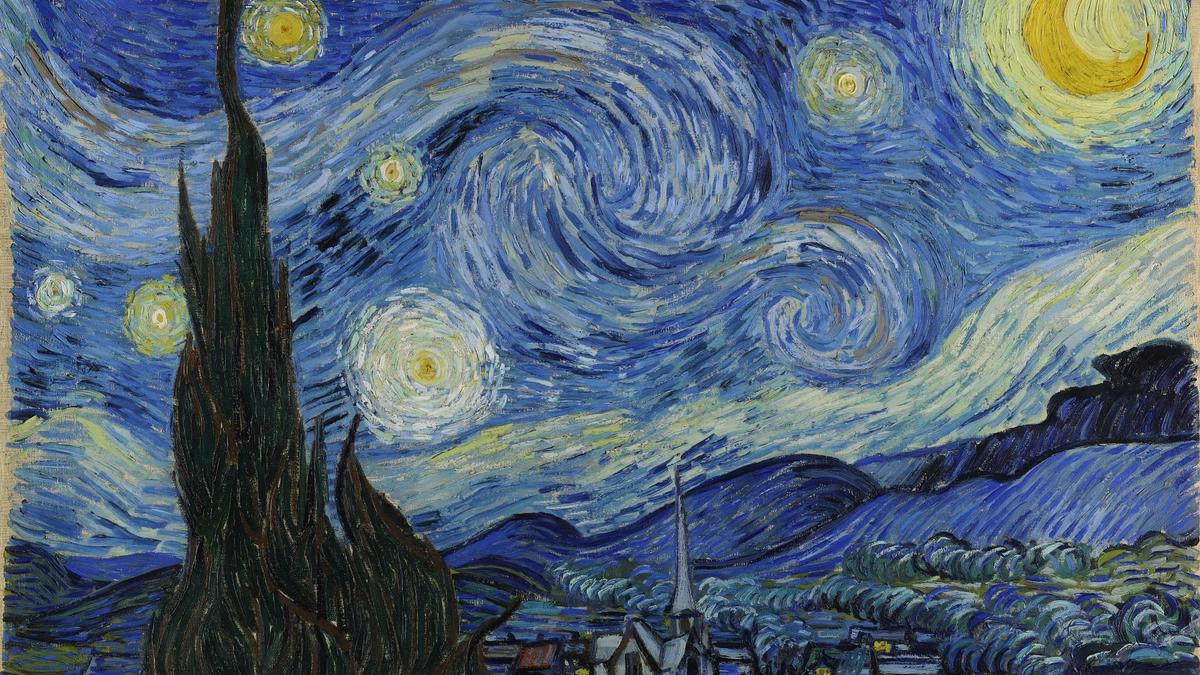
In informal tests, the authors say the model is at least comparable with Qwen 3.8 27B, and that more validation is needed. Their demos include a WebGL shader that recreates Van Gogh's Starry Night after 24 rounds of screenshot review, and a single-page expense-splitting app built from a photo of a hand-drawn wireframe.[1]
Running it on a laptop or a server
Weights ship in mixed precision, with NVFP4 and MXFP8 expert weights. Quantised GGUF files at 4-bit IQ4_NL and 8-bit Q8_0 are available for llama.cpp and the Llama App, which runs on macOS and Windows. MLX support has been added to mlx-lm, and Transformers handles text, images and tool calling.[1]
For datacentres, SGLang has day-zero support, and the post says the setup must run on SM103 hardware. A DSpark drafter supports speculative decoding at a small memory cost that the post does not quantify. The authors benchmarked on a single NVIDIA B300 GPU with 1,024-token prompts and outputs, but the speed comparison appears only as a chart.[1]
Reasoning effort is a setting from none to max, with high as the default. The post gives no minimum memory or recommended local hardware, and no price, training data or compute details. One demo was recorded on an Apple M4 Max, which shows what the authors used, not what the model needs.[1]
Why Malaysia should care
Our analysis: the post names no Malaysian partner or deployment. A model with 3 billion active parameters and 4-bit files may suit Malaysian developers and SMEs that want to test a model on their own laptops before paying for cloud tokens, because prompts and documents can stay on the machine. The post does not say how well it handles Bahasa Malaysia, Chinese or Tamil, so local teams should test that themselves.
Malaysian developers and startups
A small active-parameter count and 4-bit files let a team try the model on its own machine.[1]
Practical move: Download the GGUF file and run your own Bahasa Malaysia and English prompts.
SMEs handling customer or staff documents
Running a model locally can keep documents on the machine, but the post makes no privacy claim.[1]
Practical move: Ask any vendor where prompts are processed before a pilot.
IT and procurement teams
The post states no licence, so commercial rights are unknown from this source.[1]
Practical move: Read the model card licence before any business use.
What Malaysians can do now
- Read the Hugging Face post and model card before quoting any benchmark result.
- Test the 4-bit file on your own documents and languages before judging quality.
- Check the licence on the model card before using it in a product.
What we still do not know
What we still do not know
- Which licence applies to the weights.
- How much memory the 4-bit and 8-bit files need on a laptop.
- How the model scores in Bahasa Malaysia, Chinese and Tamil.
Sources
- Inkling 2 MiniHugging Face, 20 November 2026
- File:Laptop on a desk (Unsplash).jpgWikimedia Commons, 15 June 2014
- File:Van Gogh - Starry Night - Google Art Project.jpgWikimedia Commons
- File:Rear of rack at NERSC data center - closeup.jpgWikimedia Commons, 14 October 2011
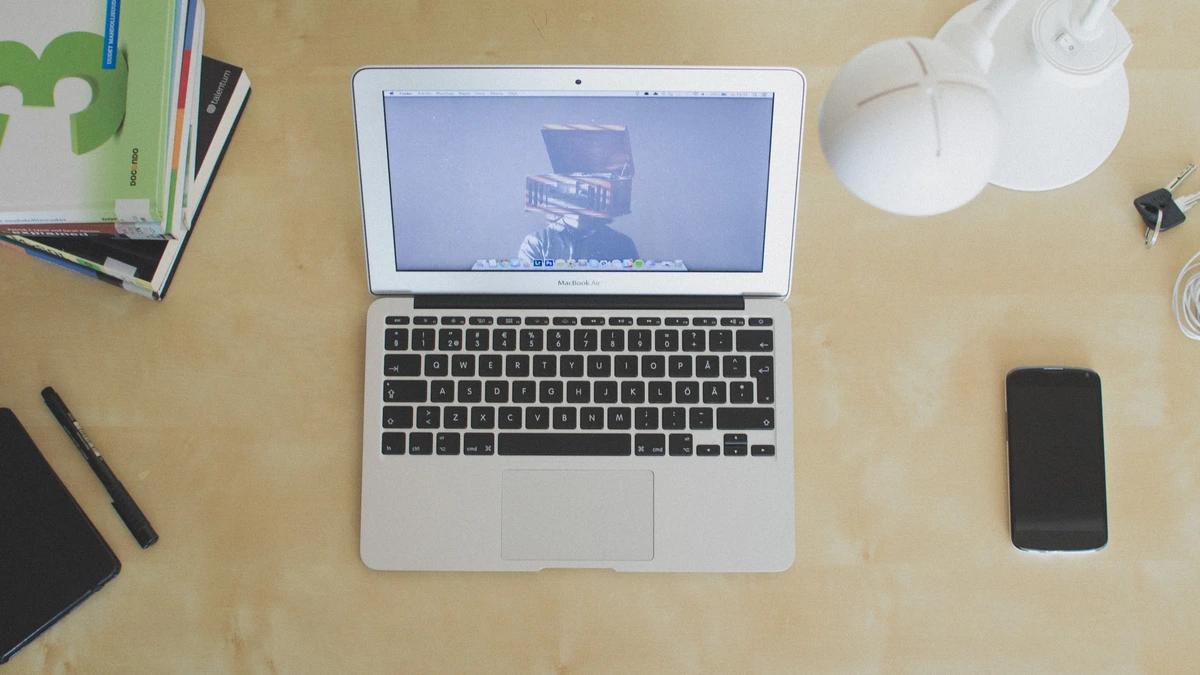
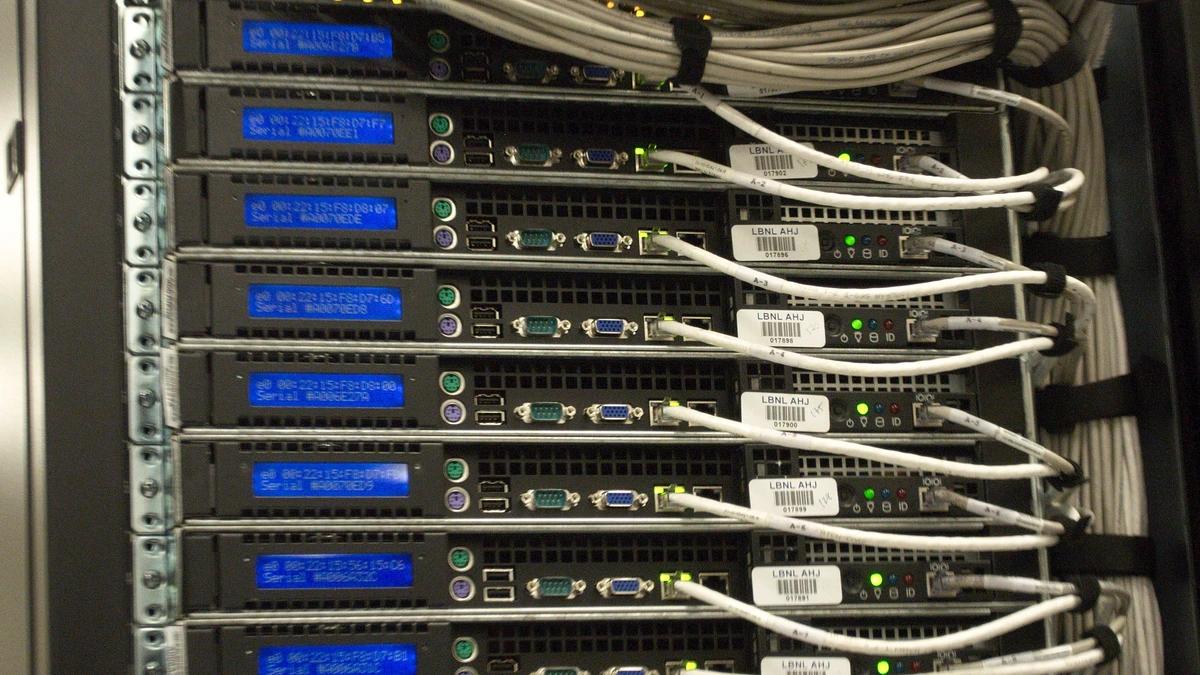
Facts come from the Hugging Face post dated 20 November 2026, read on 22 November. Claims and benchmark results are those of the post's authors, and we did not run or audit the model. The section marked as our analysis is Utopia's interpretation. The three photographs are contextual Wikimedia Commons images of a laptop, a data-centre server rack and Van Gogh's painting, and none shows Thinking Machines or Inkling. No generated image is used.
Last fact check: 22 November 2026. Factual correction? devteam.utopia@gmail.com.