

llama.cpp Reaches Version 1.0.0, Promising Stable Interfaces for Local AI
The maintainers say developers who build on the local-inference library can now expect breaking changes only at major versions. Performance claims and migration notes are absent from the announcement.
By Utopia Data & AI Team5 min read
In brief
- On 13 November 2026 the maintainers of llama.cpp and ggml released both libraries as version 1.0.0. Hugging Face published the announcement on its blog the same day.[1][2]
- From now on, a change that breaks the public C interface or the binary interface will raise the major version number. The maintainers say they will be stricter about making those boundaries visible to developers who depend on the libraries.[1]
- The announcement gives no benchmark, no list of removed features and no migration guide. We read the blog post and the release listings, and did not build or test the software.[1][2]
What the maintainers announced
The team behind llama.cpp, a widely used open-source program for running large language models on ordinary computers, released version 1.0.0 of the program's library and of ggml, its tensor library, on 13 November 2026. GitHub lists v1.0.0 as the latest release of llama.cpp, published at 10:20 UTC that day, and ggml shows a v1.0.0 release dated the same day.[1][2][3]
The announcement appeared on the Hugging Face blog under the ggml-org account, with Daniel Bevenius and Georgi Gerganov among the listed authors. It describes the project as 3.5 years old and says many downstream applications already depend on it. The maintainers write that a flexible but stable interface is therefore essential, and that version 1.0.0 reflects their responsibility to those developers.[1]
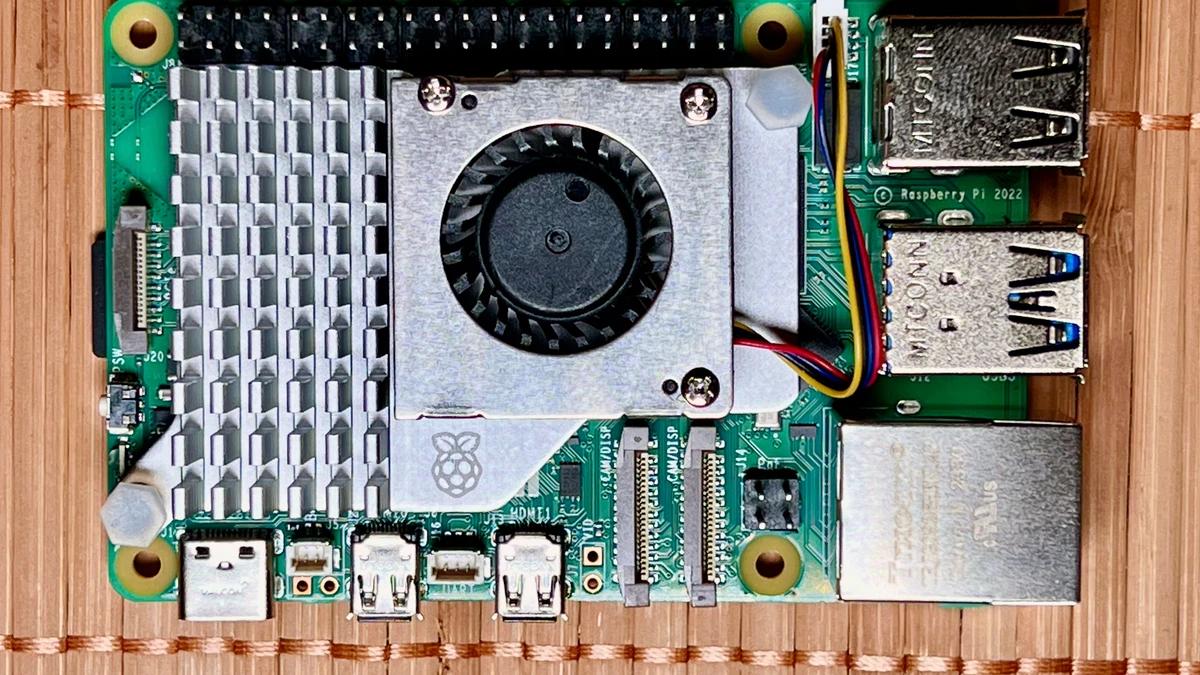
Versioning rules: breaking changes now cost a major version
The central change is a promise about numbering. The post sets out rules for every ggml-org project that uses semantic versioning. A breaking change to the public C interface in the include folder raises the major number. A backward-compatible feature, a backend update, support for a new model or an added interface function raises the minor number. A bug fix with no interface change raises the patch number.[1]
The maintainers say both llama.cpp and ggml will reflect interface and binary incompatibilities with major-version bumps. The post names two public libraries: libllama, with headers in the llama.cpp include folder, and libggml, with headers in the ggml include folder. The post does not list any existing function that will change or disappear, and it does not say when version 2.0.0 might arrive.[1]
Reach: where the software runs and how it ships
The post describes llama.cpp as able to run multimodal models on hardware from consumer machines to high-end servers, using quantization, optimised backends and a portable C and C++ code base. It says each ggml backend can be built as a dynamic library and loaded at run time, and that the project currently supports more than 150 model architecture variants and all mainstream speculative decoding methods.[1]
A table lists the ways the software reaches users. Pre-release artifacts cover Linux, macOS, Windows, Android and iOS. Docker images serve Linux. Debian, Homebrew, conda-forge, MacPorts and Winget packages are listed, along with an XCFramework for iOS and macOS. The maintainers say they want to widen distribution and point packagers to a public discussion on adding ggml-org projects to release pipelines.[1]
Development: continuous testing and AI-assisted coding, with limits
The maintainers say the pace of development has risen with advances in AI for software engineering, and that they adapt LLMs into their own development cycle in what they call a thoughtful and reasonable manner. They state that keeping the code base at high quality, staying in control of the architecture and understanding implementation details will stay their priorities.[1]
To support that pace, they say they keep investing in test infrastructure. Hugging Face tools, named as HF Buckets and HF Jobs, supply the capacity to check every change that lands on the main branches. Self-hosted test runners run on hardware supported by NVIDIA, AMD, Qualcomm, Arm, IBM and Intel. The post calls the Hugging Face group the llama.cpp team at Hugging Face. We did not check how the project's governance or funding is arranged.[1]
GitHub's repository page, read on 16 November, shows the llama.cpp project under an MIT licence, created on 10 March 2023, with about 135,000 stars. Release tags with build numbers, such as b12421 on 15 November, still appear in the release list. We did not establish how those build tags relate to the new version numbers.[2]
Our view for Malaysian businesses
This section is our analysis, not a claim by the maintainers. A firm that runs a chatbot or document tool on its own computers, for example to keep customer records away from a cloud service, depends on software like this. A stable interface lowers the cost of upgrades for the developers and agencies that build those tools, because a major version number gives an early warning of work ahead.[1]
The announcement contains no speed figures, no hardware requirements for any model and no statement on support. A firm cannot judge from it whether a local setup will be fast enough for its needs. Anyone planning one should test a real workload on the intended hardware, and should ask the developer which version of the library the product uses and how upgrades will be handled.[1]
Why Malaysia should care
Malaysian firms that keep customer data on their own machines can now build on llama.cpp with clearer upgrade rules. The announcement says nothing about performance, support terms or any Malaysian user, so this is a maintenance signal, not a product launch.
Developers building local AI tools
Breaking changes should now come with a major version number. Past changes were not covered by this rule.[1]
Practical move: Pin the library version and read the release notes before upgrading.
Firms that keep data on their own machines
The announcement gives no speed or hardware figures, so it cannot show whether local AI is practical for you.[1]
Practical move: Test a real workload on the hardware you plan to buy.
IT teams and software vendors
The project lists many packaging routes, but the post does not say who supports a given package.[1]
Practical move: Ask the vendor which version it ships and who handles security fixes.
What Malaysians can do now
- Ask any vendor of a local AI product which llama.cpp or ggml version it uses.
- Pin library versions in your build and read release notes before each upgrade.
- Test a real workload on the intended hardware before you buy it.
What we still do not know
What we still do not know
- Which existing functions, if any, changed in v1.0.0 and what upgrading costs developers.
- How the build-numbered release tags relate to the new version numbers.
- How fast common models run on typical office hardware with this version.
Sources
- llama.cpp v1.0.0 : A stronger foundation for the local AI ecosystemHugging Face Blog (ggml-org), 13 November 2026
- llama.cpp v1.0.0 releaseGitHub (ggml-org/llama.cpp), 13 November 2026
- ggml v1.0.0 releaseGitHub (ggml-org/ggml), 13 November 2026
- File:Mac mini 2024 (cropped).jpgWikimedia Commons, 9 November 2024
- File:Raspberry Pi 5 with active cooler.jpgWikimedia Commons, 11 January 2024
- File:Datacenter Server Racks (22370909788).jpgWikimedia Commons, 4 November 2015
Facts come from the maintainers' post on the Hugging Face blog dated 13 November 2026 and from GitHub's public release data for llama.cpp and ggml, all read on 16 November. Sections marked as our view are analysis. We did not build or run llama.cpp, test any model, or contact the maintainers. The three photographs are licensed contextual images of generic computing hardware; none shows llama.cpp. No generated image is used.
Last fact check: 16 November 2026. Factual correction? devteam.utopia@gmail.com.