

Google Announces US$15 Billion Malaysia Investment, Led by New Data Centre Campuses
Google says its US$15 billion plan will add data centre campuses, more than 1 GW of clean power and skills programmes for 800,000 people. The jobs and GDP figures are Google's own projections.
By Utopia Data & AI Team6 min read

In brief
- Google announced on 4 November 2026 that it plans to invest US$15 billion in Malaysia over 2027 to 2028, announced in the presence of Prime Minister Anwar Ibrahim at an event at Universiti Malaya.[1]
- The plan covers new data centre campuses in Selangor and Negeri Sembilan, more than 1 GW of new clean energy capacity for the national grid, and four programmes meant to upskill about 800,000 Malaysians by 2031.[1]
- Google's job and GDP figures are its own projections for the construction phase. The Minister of Digital called the plan a high standard for sustainable infrastructure, and neither source gives a cost per campus.[1][2]
What Google announced
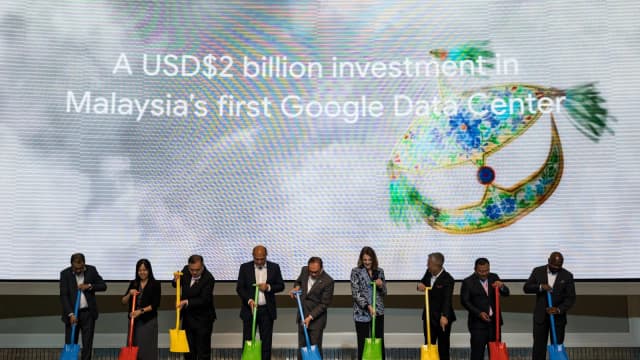
Google has put a number on its next stage in Malaysia. On 4 November 2026 the company said it will invest US$15 billion over the next two years, 2027 to 2028, in what it calls responsible digital infrastructure development. Prime Minister Anwar Ibrahim was present for the announcement at the Mantap Malaysia Bersama AI event.[1]
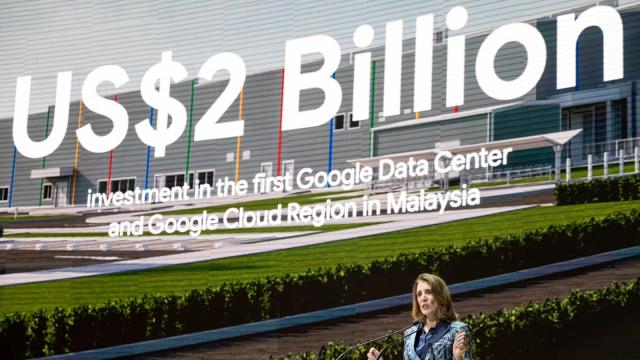
The investment builds on the US$2 billion data centre and cloud region Google announced in 2024. Google says its first campus, in Elmina Business Park, Selangor, is now operational, and that new campuses are planned in Selangor and Negeri Sembilan. Capacity in Selangor will also support an upcoming Google Cloud region for enterprise customers.[1]
The Minister of Digital, Gobind Singh Deo, spoke at the same event at Universiti Malaya. His published speech thanks Google for its confidence and invites it to become a strategic partner in building Malaysia's AI economy, not only its infrastructure.[1][2]

Campuses, suppliers and the jobs estimate
Google says it is working with a domestic supply chain of more than 80 Malaysian entities. They cover construction and civil engineering, network infrastructure, power and cooling components, and services such as logistics, legal work, catering and waste management. Google expects the relationship to continue across the multi-decade life of the data centres.[1]
The company projects that the construction phase, 2027 to 2028, will add an annual average of US$1.1 billion to Malaysia's GDP and support more than 37,000 local jobs a year, with US$378 million in average annual labour income. About 6,000 of those jobs are in construction. Once the facilities operate, Google projects more than 9,000 local jobs a year, paid on average 45 percent above the national median.[1]
These are Google's own estimates and the post does not publish the model behind them. Construction jobs are temporary by nature, and the operating-phase figure includes contractors and workers at nearby shops and restaurants, not only data centre staff. That is a wider definition than readers may assume.[1]
Power and water commitments
Google says it plans to bring more than 1 GW of new clean energy capacity to Malaysia's national grid. It describes the work as anchored on a collaboration with Tenaga Nasional Berhad and says it will enable new generation under the Corporate Renewable Energy Supply Scheme. The collaboration will also explore round-the-clock clean energy projects to cover the gaps in solar output.[1]
The company also says it will pay for 100 percent of the power its campuses use, plus the direct infrastructure costs of connecting them to the grid, while following local regulations. In 2027 it plans community programmes to ease electricity bills for households in host states. Google reports an expected power usage effectiveness of 1.12 to 1.14 in Malaysia, against an industry average of 1.54, with quarterly figures to be published for each site once it is fully operational.[1]
On water, Google says its assessments found local watershed supplies in Selangor and Negeri Sembilan were not at high risk of scarcity, so it will use water cooling at its campuses there. It announced two replenishment projects, in the Sungai Buloh and Sungai Selangor basins, and school water tanks at four Selangor schools. Replenishment volumes are to be audited by independent hydrologists.[1]

Four skills programmes aimed at 800,000 people
Google announced four programmes to upskill about 800,000 Malaysians from 2027 to 2031. Experience AI Malaysia, with the Ministry of Education, Penang Science Cluster and the Raspberry Pi Foundation, will certify educators to teach AI to students aged 11 to 14. Jelajah AI MSME, with Pepper Labs, will run clinics for microentrepreneurs in Selangor and Negeri Sembilan.[1]
The other two target the public sector and technical jobseekers. AKAD Rakyat, with Arus Academy, aims to train officers in 19 local councils in the two states. Data Center Institutes at selected polytechnics will start in 2027, with a 10-week curriculum for technical and vocational jobseekers. The post does not say how many people each programme will reach, so the 800,000 total cannot be split by programme.[1]
Why Malaysia should care
Our analysis: for Malaysian firms, the practical question is access, not headlines. Google says its Selangor capacity will support a Google Cloud region for enterprise customers, but it gives no launch date or ringgit pricing. Businesses that buy cloud services should ask when local capacity opens and what it costs.
Malaysian businesses buying cloud services
A local Google Cloud region may cut latency and help with data residency. The post gives no launch date or pricing.[1]
Practical move: Ask your cloud account manager for the region timeline and ringgit rates before you plan a move.
Suppliers in construction, cooling and power
Google says it works with more than 80 Malaysian entities and will keep doing so over the facilities' life.[1]
Practical move: Check how Google's supplier process works if you serve data centres.
Teachers, MSMEs and jobseekers
Four programmes start from 2027, first in Selangor and Negeri Sembilan.[1]
Practical move: Watch for enrolment details from the named partners.
What Malaysians can do now
- Ask providers for the local Google Cloud region timeline and ringgit pricing.
- Treat jobs and GDP figures as projections until independent data appears.
- Follow the named partners for programme enrolment dates.
What we still do not know
What we still do not know
- How much each campus will cost and when each will open.
- How much electricity the campuses will draw, and what that means for households.
- When the Malaysian Google Cloud region opens and at what price.
Sources
- Google Announces Digital Infrastructure Expansion, Local Jobs, Water Replenishment, and Clean Energy Initiatives with US$15 Billion Malaysia InvestmentGoogle Malaysia Blog, 4 November 2026
- Mantap Malaysia Bersama AI (speech by the Minister of Digital)Ministry of Digital Malaysia, 4 November 2026
- File:Exterior view of the main gate, Google's Taiwan data center in Xianxi, Changhua, as taken on 7 March 2021.jpgWikimedia Commons, 7 March 2021
- File:Dewan Tunku Canselor at night.jpgWikimedia Commons, 17 November 2023
- File:Kuala Lumpur Skyline at dusk 1.jpgWikimedia Commons, 1 January 2017
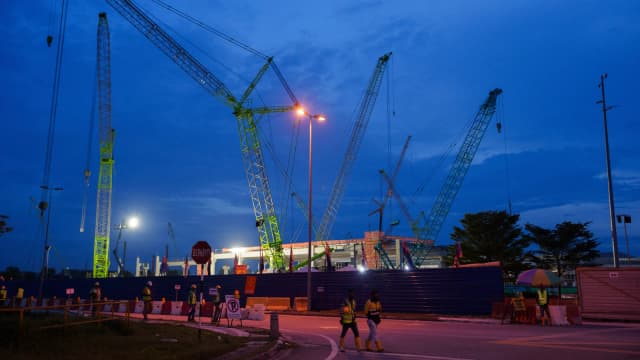
Facts come from Google's blog post of 4 November 2026 and the Ministry of Digital's published speech of the same date, both read directly on 17 November. Job, GDP, efficiency and clean energy figures are Google's own claims. We did not verify them independently or read the event coverage in full. The three photographs are licensed contextual images: the data centre shown is in Taiwan, not Malaysia, and the hall shown is not confirmed as the venue. No generated image is used.
Last fact check: 17 November 2026. Factual correction? devteam.utopia@gmail.com.